We’re delighted to see the Welcome Wall at National Galleries of Scotland featured in a new Museums Association case study. It’s a project we helped develop, and a lovely example of what can happen when accessibility becomes part of the everyday visitor experience.
What if you could walk into a gallery and find everything you needed to be comfortable, without having to ask anyone?
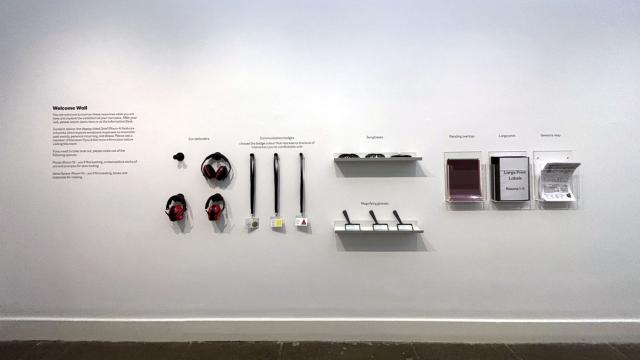
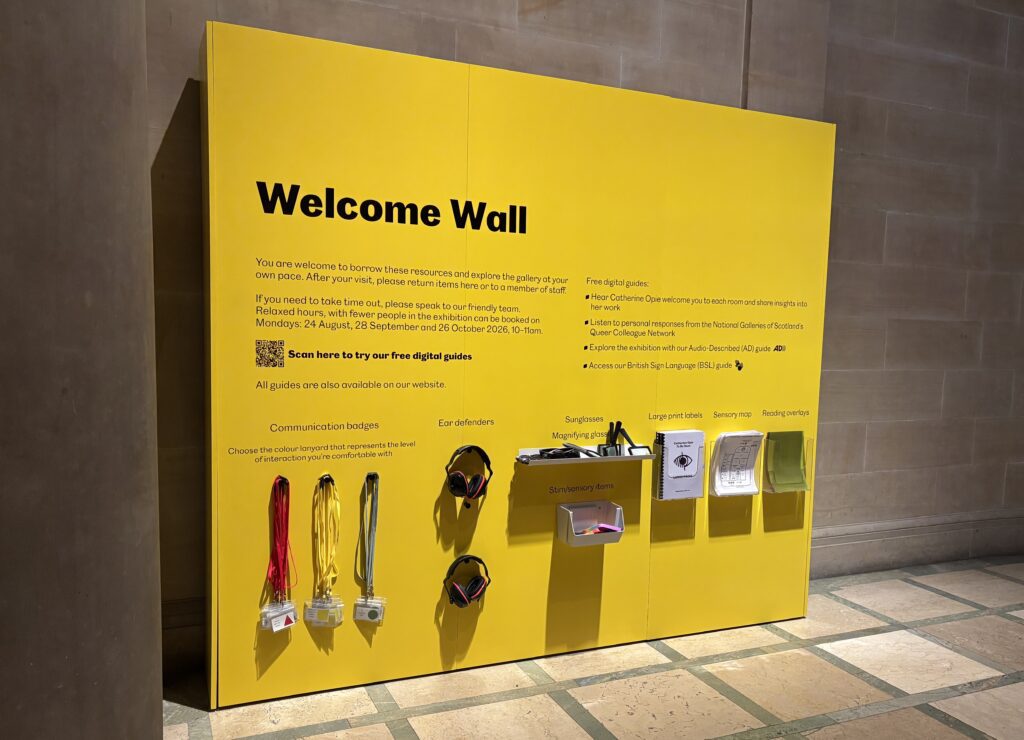
That’s the idea behind the Welcome Wall at National Galleries of Scotland (NGS). It’s an open display of access resources, including ear defenders, communication badges, magnifying glasses, sunglasses and sensory maps, which visitors can borrow freely.
Our parent community interest company, Door in the Wall Arts Access CIC, worked with the NGS team during the development of the Welcome Wall, drawing on our experience of creating similar resource displays and helping cultural organisations think differently about accessibility.
Now the project has been featured in a Museums Association case study, written by NGS colleagues Meg Faragher and Maro Psyrra. We’re chuffed to bits to see our involvement acknowledged, and even more delighted to see how the idea has grown.
What did we bring to it?
We had already developed similar resource displays, and have spent years helping organisations rethink how access can be built into an experience rather than bolted on. We drew on that experience to advice the NGS team as they developed the Welcome Wall, thinking about how access resources could become a visible, welcoming part of the gallery experience.
The thinking behind all of it is simple: you shouldn’t have to ask for access.
Why does this matter to us?
Neuk Collective brings together, supports and advocates for neurodivergent artists in Scotland. We know how much energy it takes to ask for what you need, explain why, and hope you’re believed. Many of us do it in every new space, often before we’ve seen a thing.
Before the Welcome Wall, NGS kept its access items in boxes behind the information desks. Good items, and a hidden system. You had to make your needs known first.
Moving them onto an open wall by the entrance changes the message. These tools are there for everyone, and you don’t have to disclose anything or fit a category. You just pick up what helps. That’s why it’s called the Welcome Wall, not the Accessible Wall. It’s how every visitor should feel.
For our Access Lead, Tzipporah, one of the loveliest things about the project was working with people who really cared about getting access right: “One thing that really stayed with me from working with Meg and Maro was how genuinely committed they were to making people feel welcome. We sometimes see organisations invest in access resources, only for them to end up tucked away in a cupboard where nobody knows they’re available. Meg and Maro really cared about how visitors would experience the gallery, and how they could make it easier for people to engage with the art. It was such a pleasure to work with people who saw accessibility as an important part of the visitor experience, rather than something to tick off a list.”
Seeing it spread
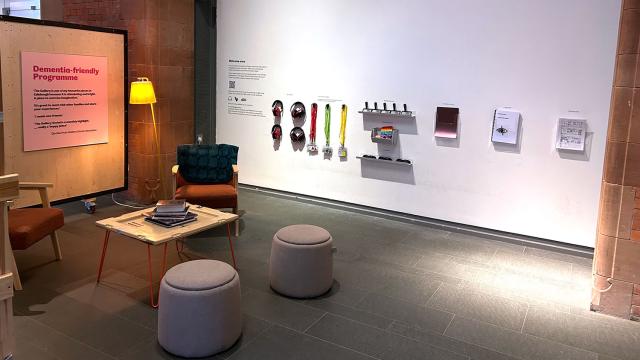
What we love most is that it didn’t stop at one exhibition. The wall began as a temporary feature at Modern One and is now a permanent fixture there. Two more have gone up at the Portrait Gallery, one as part of a quieter welcome area with flexible seating, weighted blankets and stim items. The next is planned for the National Gallery.
An idea that works tends to travel, and it’s lovely to watch this one do it. One sector professional quoted in the case study called it “an example of embedding accessibility at its finest”. We couldn’t agree more.
NGS colleagues Meg Faragher and Maro Psyrra have written the full story for the Museums Association, including how the wall works, what visitors have said and what they’ve learned about restocking. It’s well worth a read.
If you work in a venue and are wondering how to make access more visible, get in touch. We’d love to talk.