Tag: meet the artist
Together Apart: Meet the Artist
I’m ArBee, a Glaswegian artist who uses automatism to create abstract works. I never plan what im going to do and never stick to just one media or substrate. I get more results by mixing things up! It works very well with the impulsiveness that comes with ADHD.
What does the theme Together/Apart mean to you?
To me, Together/Apart reflects the contrast I experience living with ADHD, especially since my discovery in my 30s. Some days I feel “together” — focused, motivated, and satisfied by what I accomplish. Other days, I feel “apart” — overwhelmed and stuck, with a disconnect between what I want to do and what I’m able to do. I connect this idea to my fascination with abandoned buildings: once complete and purposeful, now worn and reclaimed over time. Even in their imperfection and decay, they hold a kind of beauty — just like the balance between feeling together and apart.
What do you like about being part of a collective?
Its really comforting to know that there will be others feeling the same as you. Not only do you share ideas for art but also advice and life hacks for being a neurodivergent. I always feel happy to have discovered this collective and for being allowed to be part of it. Its a community in itself.
What else should someone do in Glasgow when they come to see the show?
Glasgow has some great places for a day out! A firm fave of mines is Kelvingrove Art Gallery and Museum and The Burrell Collection, you need a full day dedicated to these as they are massive! Another great recommendation is the Gallery of Modern Art (GOMA), Grateful Gallery and Stag Gallery and Framers in Buchannan Galleries. To name a few!
Together Apart Meet the Artist
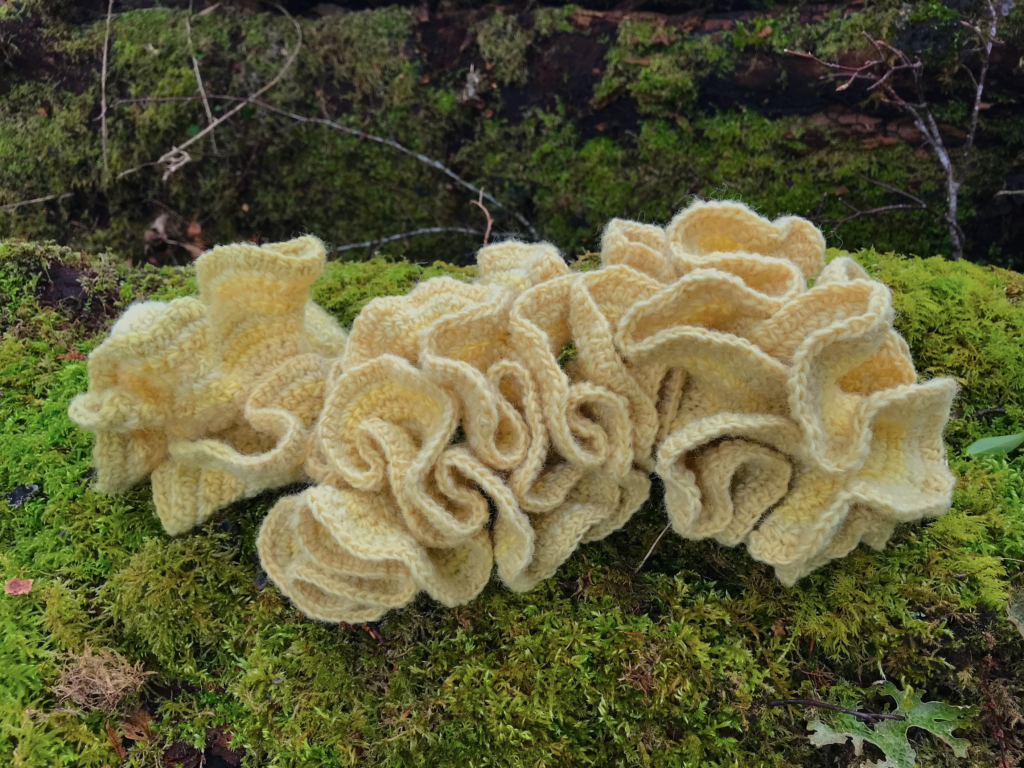
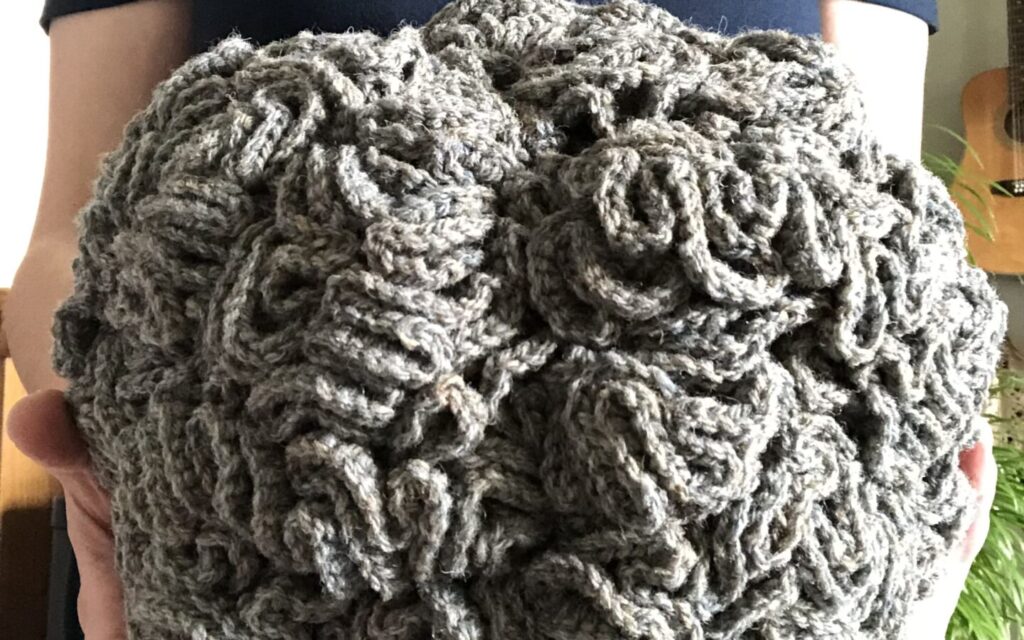
I’m Gaelle Chassery, a sensory artist living in Kilmartin Glen on the Scottish West Coast, where I work primarily with Scottish wool which I crochet or needle-felt into interactive sculptures. I also make sensory books with wool and with lots of other materials, like textiles, plastic waste, waste paper, etc. My art aims to reconnect people with themselves, their childlike joy and wonder, and with nature. It’s important to me to bring a sense of pause, safety, grounding and openness with what I do, and usually it’s a healing, fun and transformative experience for people to meet my sculptures and books. A key aspect of my work is that visitors are encouraged to touch and smell it, which is a lovely and permissive thing to be able to offer within exhibition settings.
What does the theme Together / Apart mean to you?
Together/Apart speaks to me on several levels: it’s the layered experience of life itself. I live in solitude almost 100% of the time while being connected online to many people through my engagement as an artist, advocate, writer and space holder: I have the experience of being apart from people while being together with them in ways that I choose mindfully because they are meaningful and respect my capacities.
My sculpture “Symbiosis” is a metaphor for that and an example of what I create in this connected solitude. It also pays tribute to the ecosystems and communities of plants, lichens, rocks and trees that I enjoy on my doorstep, and with whom I feel most at home and welcome. The yarns and wool used for the piece were sourced from a vast quantity of small Scottish producers, who inhabit their own ecosystems and establish their distinctive communities of people, sheep and plants, which results in a huge variety of textures and colours I can then put together into a piece that sings the story of the many Scottish landscapes, sheep, plants, stones and people.
What do you like about being part of Neuk Collective?
Being part of Neuk gives me a space to interact with talented artists, and I am always in awe of the countless skills and talents of our members. It’s supportive to be part of a collective of like-minded people, and to receive the help we need to make our voices heard and our art visible while normalising our experience and supporting each other.
I enjoy the opportunities Neuk gives me to test roles and see what I like to offer, so that I can contribute to this community from home. I have been hosting Body Doubling sessions for some time now, and it’s a lovely way to give back and help others.
Neuk gives me a platform for those skills, my writing, and my art, as well as tailored support in many essential areas for an artist, such as practical know-how, networking, and visibility. It’s a very valuable form of support for someone in my situation: living where I do with a very limiting illness, I have access to nothing except the Internet, and Neuk helps me make the most of it so that I can thrive anyway.
What else should someone do in Glasgow when they come to see the show?
It’s been many years since I was in Glasgow, but at the time I really enjoyed the Botanic Gardens and the Kelvingrove Museum.
Meet the Artist – Marzena Ostromecka
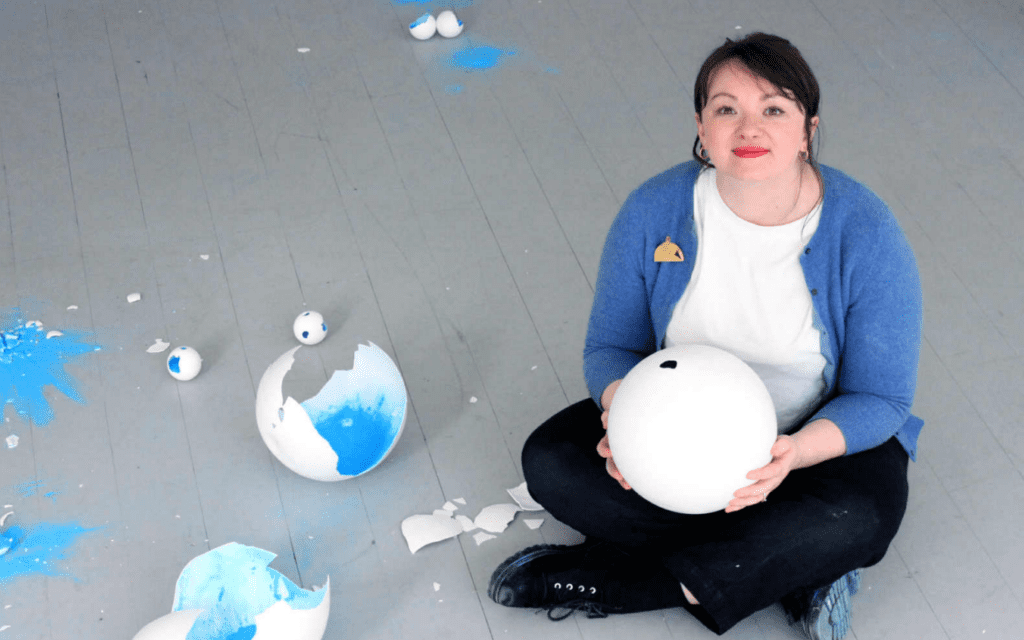
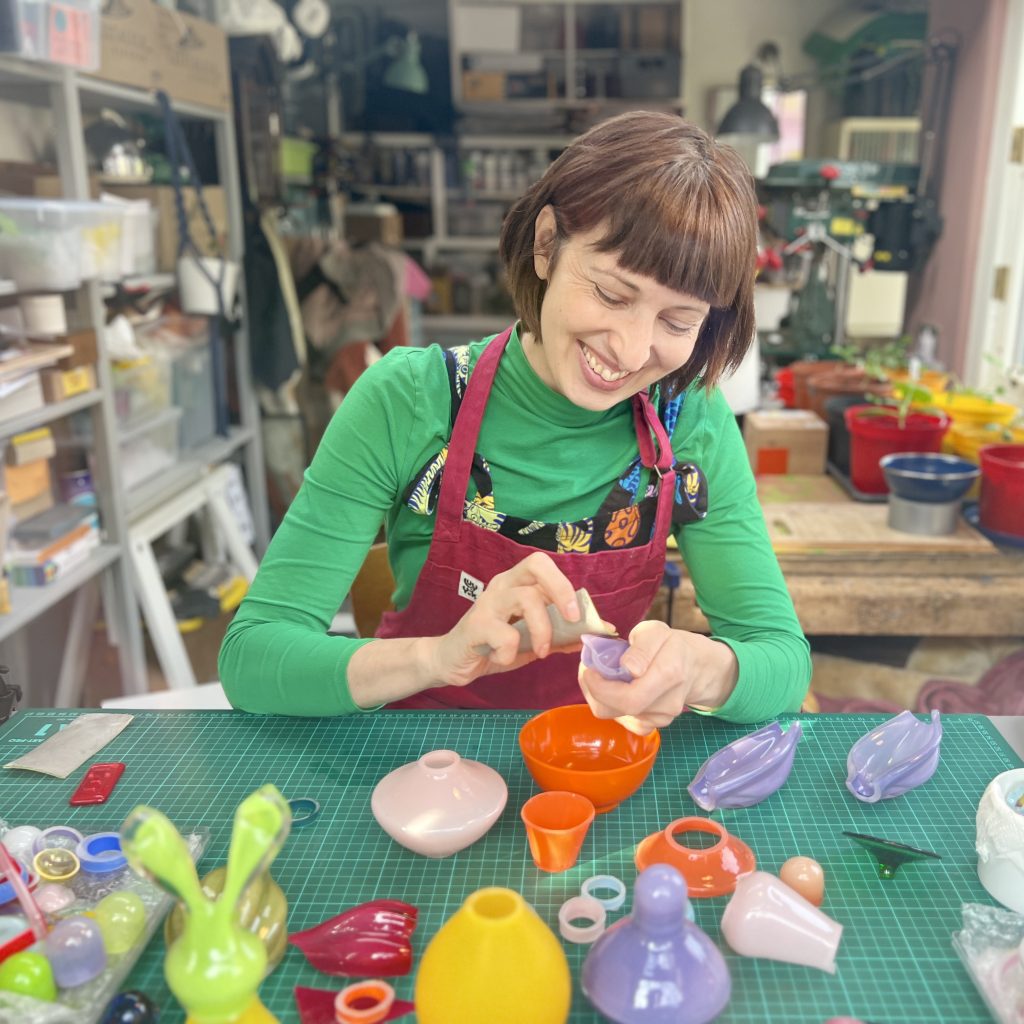
This month we meet glass artist and Neuk member Marzena Ostromecka, whose playful work adorns our exhibition poster, and will be exhibited at this year’s Glass Biennale. Marzena chats to Elspeth about ‘coming out’ as an autistic artist, her drive to experiment, and the inspirational behind her latest piece.
Interview by Elspeth Wilson
Hi Marzena! It’s great to be able to speak with you about your art, especially as we are really excited about seeing it appear in the upcoming Neuk Collective exhibition! Does being part of a collective of neurodivergent artists impact your practice or your work at all?
First and foremost, I wanted to express my gratitude for inviting me to be your ‘Meet the Artist’ featured person. I am thrilled to be able to talk about my artist journey on the Neuk Collective platform.
Initially, I was excited about this opportunity, but I quickly experienced a wave of fear, doubt, and anxiety leading to my default freeze response. My expectations were high, and I wanted to present myself in the best possible light.

I saw this interview as my coming out as an autistic artist, which felt like a huge responsibility. I instantly felt overwhelmed. However, I reminded myself that I am part of a tribe, and decided to embrace honesty and vulnerability. Knowing I belong to a collective of neurodivergent artists gives me the courage to speak openly about myself without masking or pretending. A year ago, I wouldn’t have felt comfortable calling myself an artist. Just over two years ago I was also diagnosed autistic. This is all very new to me, but identifying as an autistic artist allows me to express my creativity with more self-compassion.
Could you tell us a bit more about your journey with developing your art? We know interactivity is really important to your work – how do you make this inclusive?
In 2018 I graduated from Edinburgh College of Art with an MFA in Glass. After two intense years of studying, experimenting and making I produced my creative child Play_Zone, an interactive glass instrument. At that time, my part-time job involved supporting autistic adults with learning disabilities, many of whom were non-verbal with strong sensory needs. I was inspired by the way they experienced the world and I wanted to make something they could enjoy interacting with.
The music interpreted as colour in glass was the starting point of my work but what really made it special was the interactive element that was designed to give autonomy and choice to the spectator. Play_Zone brought joy to many diverse audiences and validated my need to connect with the viewers through my art.
Inclusivity is of paramount importance to me. This is probably the main reason I didn’t feel comfortable calling myself an artist initially because much of the art world is seen as exclusive, precious, and fragile, targeting a niche audience. I didn’t want to exclude anyone from experiencing my work. I had no specific target audience and I wanted to connect through the universal language of play.

You work with glass a lot but you use other mediums too. Can you tell us a bit about your process as an artist using different media?
I pursued glass because I fell in love with the medium through designing stained glass windows but somewhere along the way I discovered that connecting and communicating with others was of far greater importance to me as a maker than making pretty things. Having said that, I love pretty things and I think in colours so this of course has an impact on the aesthetic aspects of my work but this alone is not enough. I stand by my values and my work reflects that.
While I appreciate the aesthetic properties of glass, I am not confined to traditional studio glass techniques. I like to explore innovative techniques such as 3D modelling and printing.
Sustainability is a core value of mine, leading me to repurpose and reimagine glass forms and materials from previous projects or to incorporate elements of found objects in my work. I embrace experimentation with various glass techniques, including glass casting, fusing, slumping, painting, and copper foiling. Additionally, I incorporate mixed media such as metal elements of copper and brass sheet and rods, manipulating and bonding them together to expand the creative possibilities of my work.
I am also interested in using electronics to enhance interactivity and audience participation. I enjoy surrendering some control of my work once it’s completed and seeing it come to life through others’ experiences.

Your series ‘Decatstracted’ has been selected for the British Glass Biennale this year which is very exciting (and the work will also be in the upcoming Neuk Collective exhibition)! Congratulations! What inspired this series and how has your experience been so far as you prepare for the Biennale?
This series of five sculptures was inspired by feline senses. I find intriguing parallels between the experiences of autistic individuals and cats, and I am continuously inspired and amused by the unique ways cats navigate the world.
This body of work is a tribute to my beloved cat Miya and a celebration of her sister Velcro’s fragile life. We lost Miya suddenly two years ago due to a heart condition, a loss that hit me hard and took time to process. A year later, Velcro was diagnosed with chronic kidney disease. My role now, as a cat mum, is to keep her well and comfortable for as long as possible. This can be an all-consuming and upsetting experience, so channelling these emotions through art helps me process difficult feelings.

Despite all the grief, I had a lot of fun imagining and creating the ‘Decatstructed’ series. I surprised myself with the whimsical outcome. I aimed to embrace sensory and interactive elements in these pieces. They feature different textures, incorporate some mechanical movement, and one of my sculptures even includes real cat whiskers. I’m still developing the digital interactivity that will accompany the sculptures but at this point all I can say is that it involves the sounds of cats.
I was initially concerned about the fragility of my glass sculptures whilst on display and wanted to protect them from being touched and potentially damaged. However, I decided that providing an interactive experience for the viewer was more important to me as an artist. I trust the audience will be gentle with these delicate creatures and will approach them with curiosity and respect. I am excited to be sharing my work and hope the audience will find it amusing and fun.

You can see more of Marzena’s work on her website and social media:
Website: www.cooljazzcats.com
Instagram: @m.ostromecka
Photos of work courtesy and copyright of the artist. Portrait photos by Mike Smith.
Meet the artist – Funmi Lijadu

This month we meet Funmi Lijadu – Neuk Collective member, writer, and collage artist with an interest in social issues, identity and surrealism.
Profile by Elspeth Wilson
Hi Funmi! Could you tell us a bit more about your work and what you do?
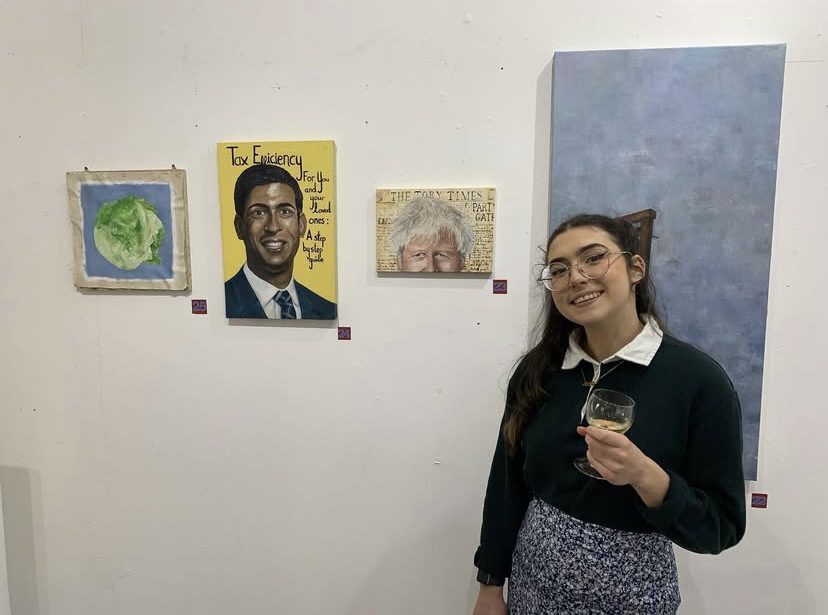
I make collage art that often reflects social issues and explores identity. I make animations, and collages on paper primarily. I love dealing with a wide range of themes in my work and enjoy the experimentation that collage allows through cutting and pasting and more digital methods as well. In both 2018 and 2021, I was commissioned by Tate Collective for Black History Month to respond to the work of artists in their collection.


You’ve talked about world-building through your art and the combination of visual culture and social change – do you see your collages as a way to creating different possible futures?
I think collage can be used to create different futures in that the process involves extracting, uplifting, and putting things into place. By using images out of context and building a new environment for them you can communicate complicated ideas in interesting ways. My collages often deal with exploring better realities for groups without power.
You recently ran a workshop on collage for Neuk Collective. Can you tell us about what drew you to Neuk in the first place?
I really enjoyed running the art workshop for Neuk! What drew me to Neuk is the conversations that I had about how disability and access need to be prioritised in the art world. Unfortunately, there is much, much more to be done, but I think Neuk is starting very important conversations.

Does being part of a collective of neurodivergent artists impact your practice or your work at all?
I find myself inspired by the way other people work, hearing about their hopes for the future and coming up with ideas together.
All images courtesy and copyright of the artist.
You can see more of Funmi’s work on her website and social media:
Website: funmilijadu.com/aboutme
Instagram: @artbyfunmi
Profile written by Elspeth Wilson
Meet the Artist – Elspeth Wilson
We meet Elspeth Wilson – writer, poet, and Neuk Collective member – to talk embodiment, appreciating pop culture, and finding community with other artists.
Hi Elspeth! Could you say a little bit about who you are and what you do?
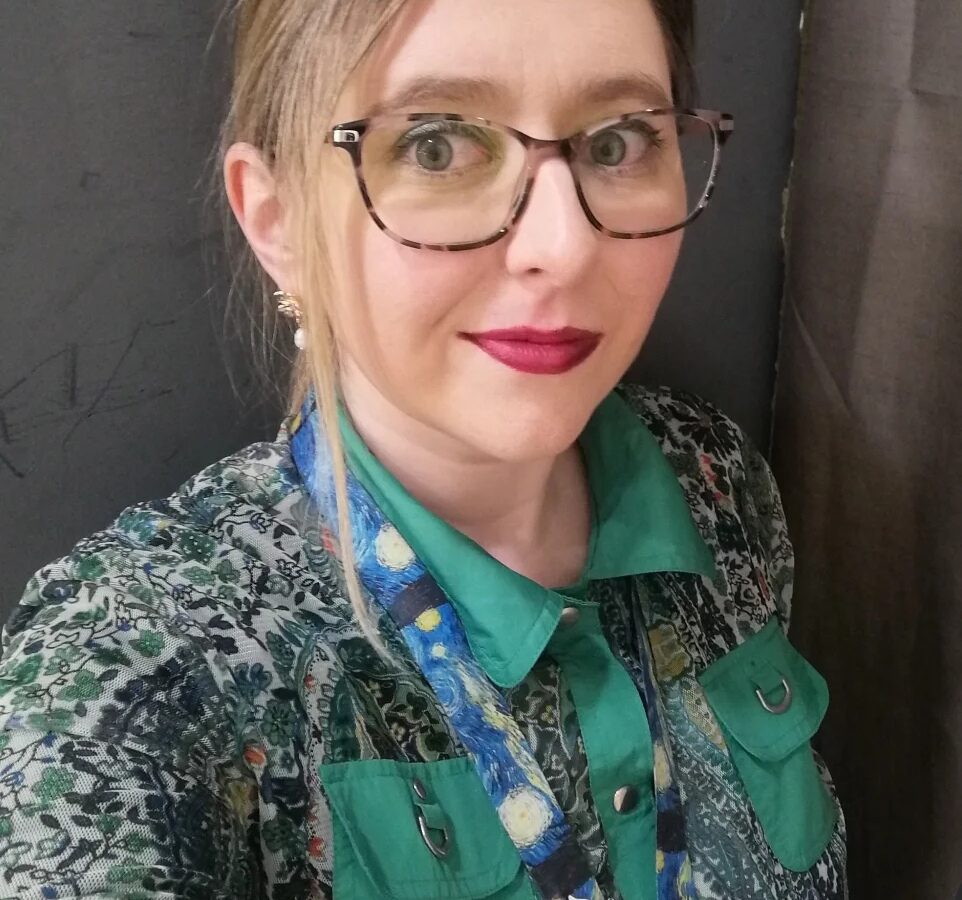
I’m a writer and poet who writes across non-fiction, fiction and poetry. I’m super interested in hybridity and blurring the lines between different genres. I often find myself coming back to the question of how we live in our bodies and I hope my work can widen the possible answers to that question. I’m really interested in how we make our bodies homes too!
I started out writing nature writing – ever since I was a child, I’ve loved spending time outdoors, exploring, playing and getting to know the world around me. I try to keep that sense of curiosity and playfulness in my work, but I also am very aware that writing about ‘nature’ in an era of climate crisis has a duty to confront that and even to problematise what we think of as ‘nature’. For instance, I’m fascinated in the distinctions we draw between animals we consider ‘wildlife’ and those we consider ‘livestock’. I hope my work can help pick apart some of the euphemistic language we use around other beings and consider different possible futures; I truly believe art – particularly art created by marginalised people – has a crucial role to play in climate justice.
Since I started writing, I’ve written more and more fiction and poetry but both are still very much imbued with a strong sense of nature and place. I’m currently working on my second novel and my debut novel, These Mortal Bodies, is coming out with Simon and Schuster in 2025 which I’m really excited about (as well as a little nervous!).

You write about pop culture in your work a lot. Can you say a bit more about that?

Absolutely. Pop culture, particularly teen dramas and The Sims, are at the heart of my poetry pamphlet, Too Hot to Sleep. When I was at school, there was definitely an idea of what poetry could be about and it was quite limited and limiting – it made me feel like poetry wasn’t for me. But in my early twenties, writing about games and TV shows that I loved became incredibly important to me – it felt fun and exciting but also cathartic
and like a reclamation. It was a bit like unmasking something – here were these things that I was so invested in, that I loved, that helped me to discover myself and I was able to re-examine all those aspects through writing.
It was also about shedding shame – often as neurodivergent people we can have a special interest in a piece of pop culture or love a certain world so much and find it supportive of our mental health. That’s something I wanted to celebrate; poetry is often about articulating emotions and experiences that can feel hard to describe in any other medium. In poems like ‘In Sims, I WooHoo with a Girl’ I wanted to communicate how euphoric and validating pop culture can be. Although my more recent projects don’t focus as much on pop culture having that kind of poppy, irreverent vibe at the heart of my work will always be so important to me. I thoroughly reject the idea of there being things we should and shouldn’t write about or things that are ‘worthy’ of art and poetry and things that are not.

What drew you to Neuk Collective?
Community is probably the short answer! I’d been feeling quite lonely for a while in the art world because opportunities often felt inaccessible and a lot of things were centred in London. I’d made some really close friends through writing pre-Covid but in lockdown I moved away from where I’d been living previously, and was looking to connect with other artists across a range of mediums as I expanded my practice. I was also just really keen for any information about accessibility and neurodiversity in the arts so when I saw Neuk’s initial research project on neurodivergent artists and their experiences I thought yes! I previously worked as a mixed methods researcher and this kind of research felt so sorely missing – I knew I’d found a special space.
What impact has being part of the collective had for you?
Being part of the collective has been hugely important for me in terms of community and confidence. It’s enabled me to develop new skills through paid work and make new connections with lots of really interesting people. Perhaps one of the most important things for me is how Neuk has showcased best practice for

working with neurodivergent artists – or any artists really! Neuk pays fairly and on time, supports the development of its members and is really transparent and open. Whilst these things should be expected, they are all too infrequently provided in the art world, and it can become easy to settle for far less than ideal working conditions, especially when opportunities feel so few and far between. This is especially difficult for neurodivergent artists as in such a precarious world our needs are often (wilfully) overlooked, and it can feel difficult to ask for accommodations when even the most basic things like fair, on time payment are not being provided. Neuk’s work and being part of the collective has shown me a practical, hopeful vision for what a different art world could be like
You can see more of Elspeth’s work on her website and social media:
Website: www.elspethwilson.co.uk
Instagram: @elspethwrites
Twitter: @elspethwriter
Photos courtesy and copyright of the artist.